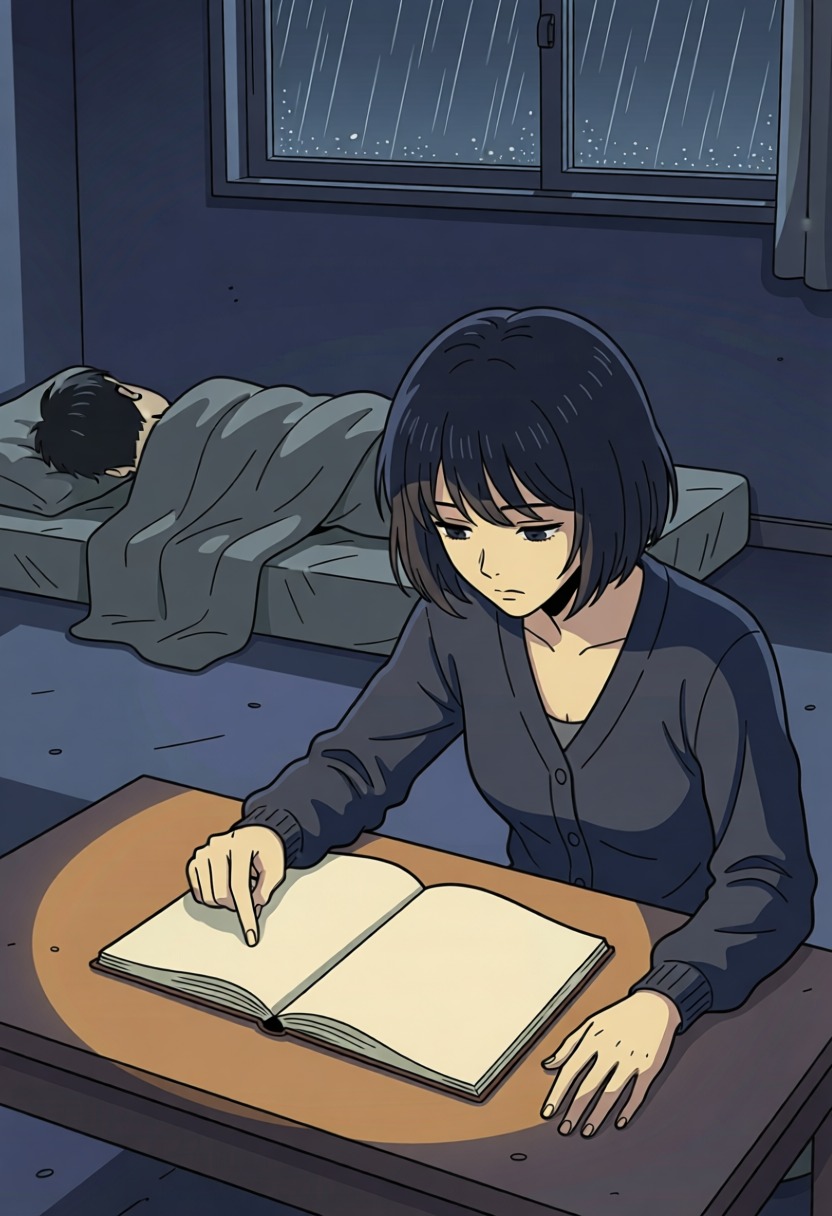
10Ep.. The Record
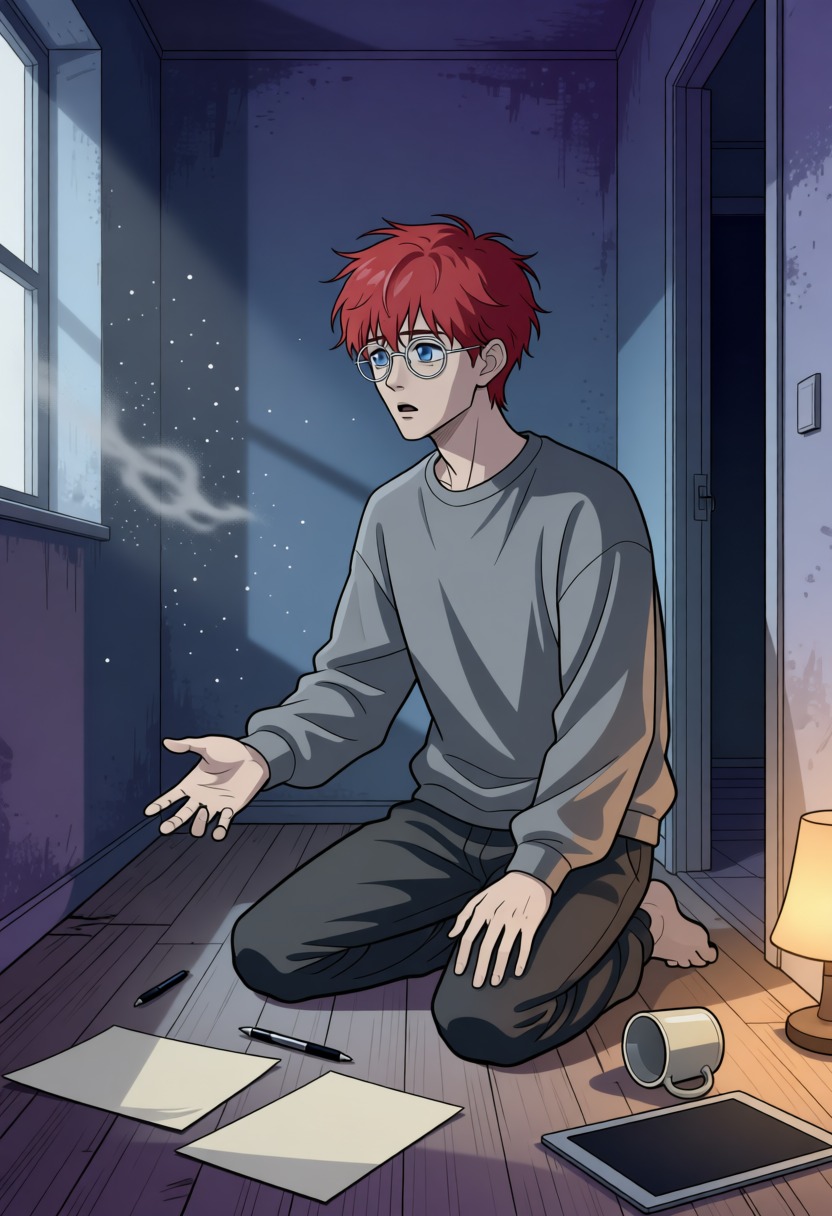
After that night, Siu emptied fast. Now he fumbled even at the layout of his own room—which way the bathroom was, how to hold a pen. Some words vanished before they reached his mouth. The name of the cup in his hand; what he'd just been about to say.
He drew nothing. Not a single stroke. And still he kept emptying. Hari wrote it in the bottom row of the ledger. — Nothing new has been charged. The price set that night is still being drawn out. The alley never billed the same thing twice. It simply took time for the whole of it to leave.
Hari didn't leave. Every day she came and sat close beside him, reading the diary aloud. As if it were medicine.
You're someone who works at dawn. You like cold coffee. You fear deadlines, yet you always finish. You collect photos of alleys and signs. The night you first drew that alley—an alley you'd never once been to—that's where all of it began.

Siu listened blankly. His own story, yet it felt like someone else's. Still, while her voice reached him, he could borrow—for a moment—who he had been. Like warming cold hands at a fire.
That day it was Siu who asked first. Open the cover of the older volume and there they were—small teeth of torn paper along the spine. The place where the first page had been ripped out.
…Why is this one empty?
I tore it out. I was twelve. It was the year my grandmother stopped recognizing me, and I wrote about her on that page. Years later I read it again—and the person on the page wasn't the person in my memory. I couldn't tell whether I'd written it wrong or remembered it wrong. So I tore it out.
After that I wrote everything down, without leaving anything out. If it's all written down, you don't have to argue later about which version is true.
And that place had stayed empty for more than a decade. On the page that followed the torn stub, Hari had still written nothing. Siu didn't ask why. Somehow he felt he knew: it was a page whose words had not been decided yet.
Hari. May I draw one last thing? This time not to lose—but to end it. Gwan, and me, and the next one too. A drawing that closes this alley.
No.
She didn't close the diary. She turned back through it. Drawings in the left column, prices in the right. One cup of coffee — the last person he'd spoken to on the phone. One alley — a kitchen on a rainy day. An old woman's legs — his hometown, his school, the faces of his friends. Her finger came down the right-hand column, slowly.
Look. The size of the drawing has nothing to do with it. The alley looks at where you drew that feeling up from. It takes the well. …So. Do you know what the well of that drawing is?
Siu didn't answer. Not because he didn't know. Hari answered for him. It was not the voice of someone crying. It was the voice of someone who had finished the arithmetic.
A cup of coffee cost you a person. The old woman's legs cost you every place you had ever lived. And now what's left of you—is only you. If you draw, you are the price.

I know.
Two words. Hari stayed there a long time, on those two words. Someone who doesn't know can be stopped. Someone who knows—all you can do is stay beside him.
…Then promise me. Even if you forget everything—leave this behind. So that I can find you again.
Siu laid his hand on the diary. It was warm. That someone had written him down this thoroughly, that someone had tried this hard not to forget him—it made him grateful enough, somehow, to weep.
That night, after he had fallen asleep, Hari turned the diary to the page of rules. Beneath the three, a fourth line had been added at some point. She had written it the day the page Siu had filled in his own hand went blank overnight. — The alley does not only take drawings. Whatever is finished with the whole heart, it takes.
She rested a finger on that line. For a long while, she left it there. Then she closed the diary and turned off the light.