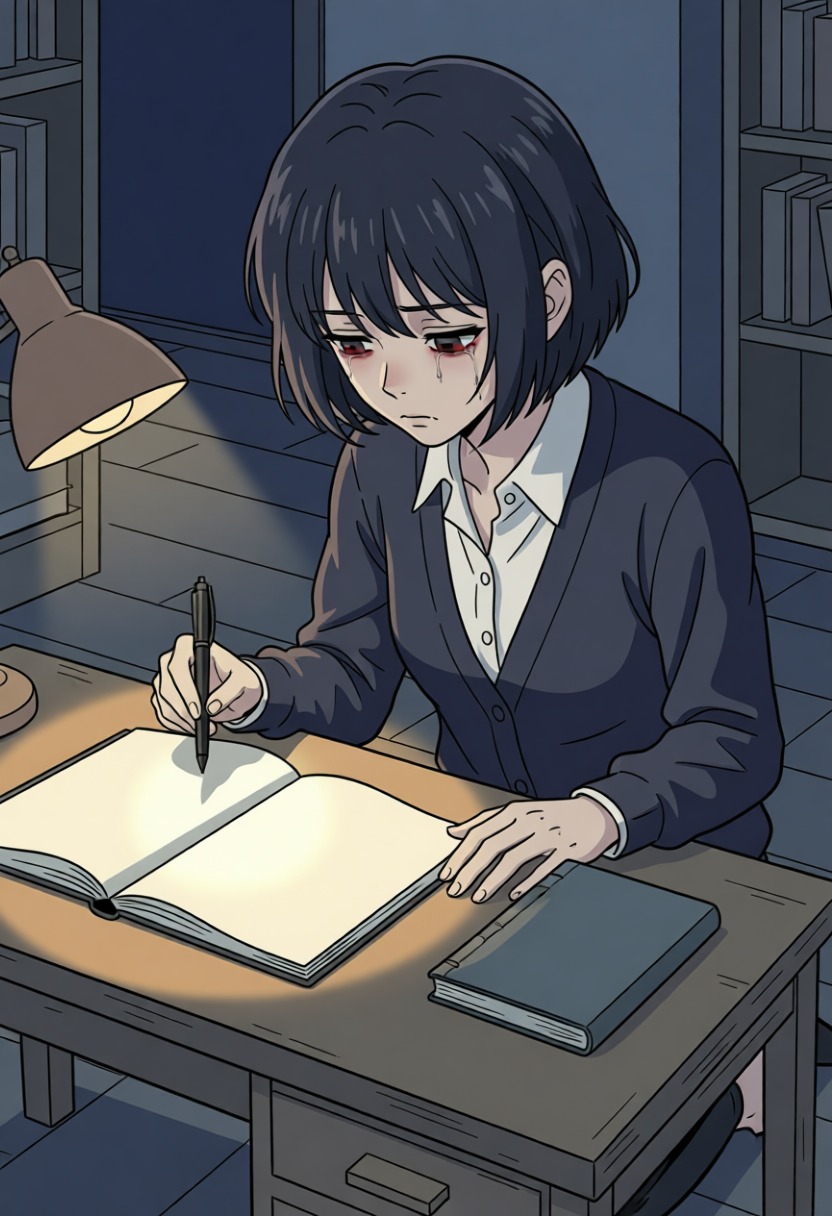
11Ep.. Self-Portrait
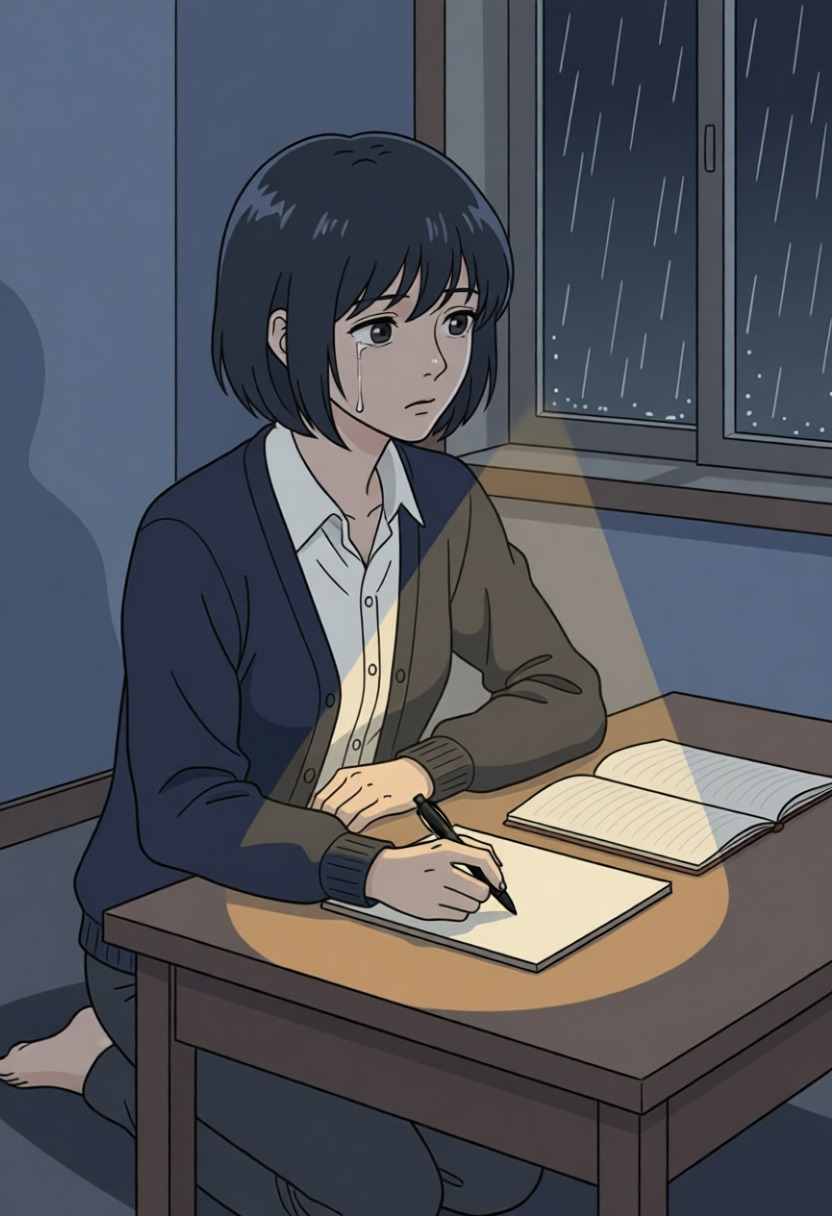
Siu took up the pen. For the last time. The hand that had nearly forgotten even how to hold it slowly remembered, once it gripped the pen. Beside him, Hari watched with held breath. She didn't stop him. Instead she laid a quiet hand on his back. To remember him, to the very end.
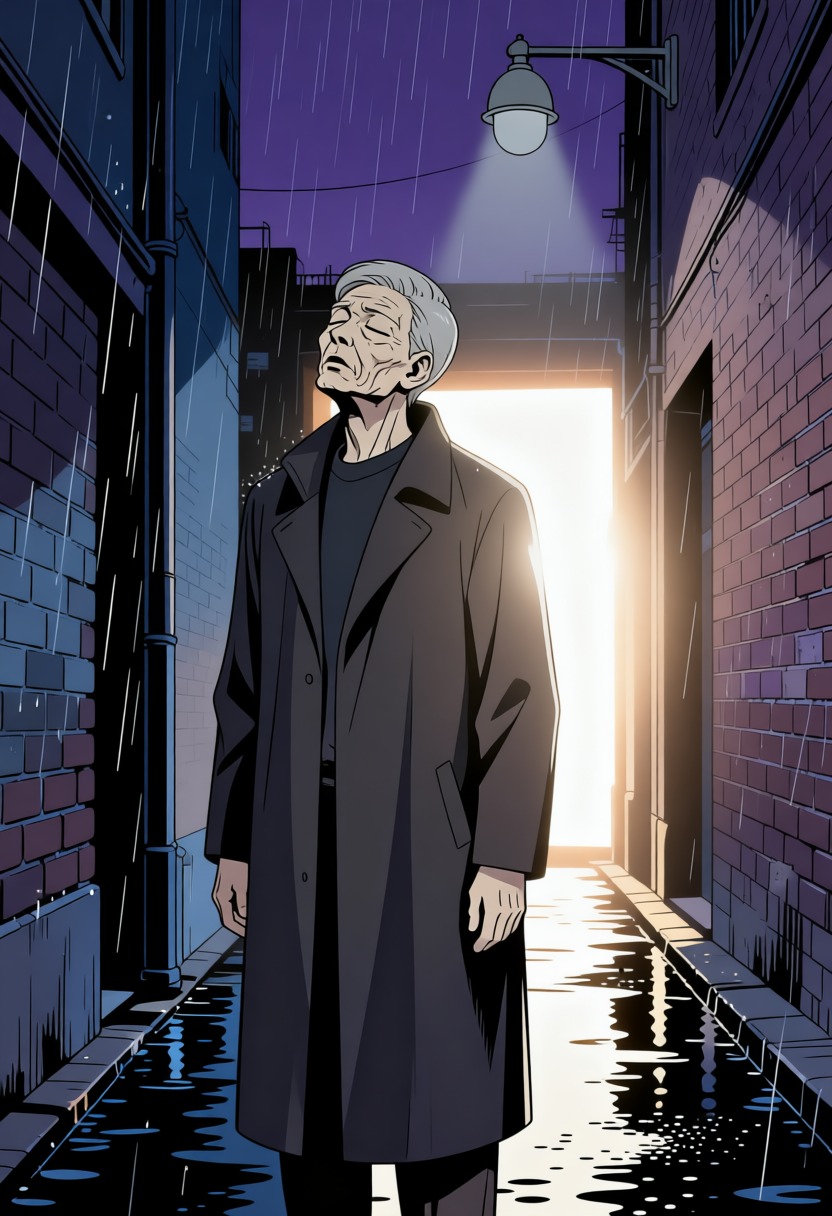
He drew the alley—not opening it, but closing it. The rain stopping, the streetlight going dark, and Gwan, trapped for ten years, finally walking toward the light. And at the alley's end, he placed one more person. Himself.
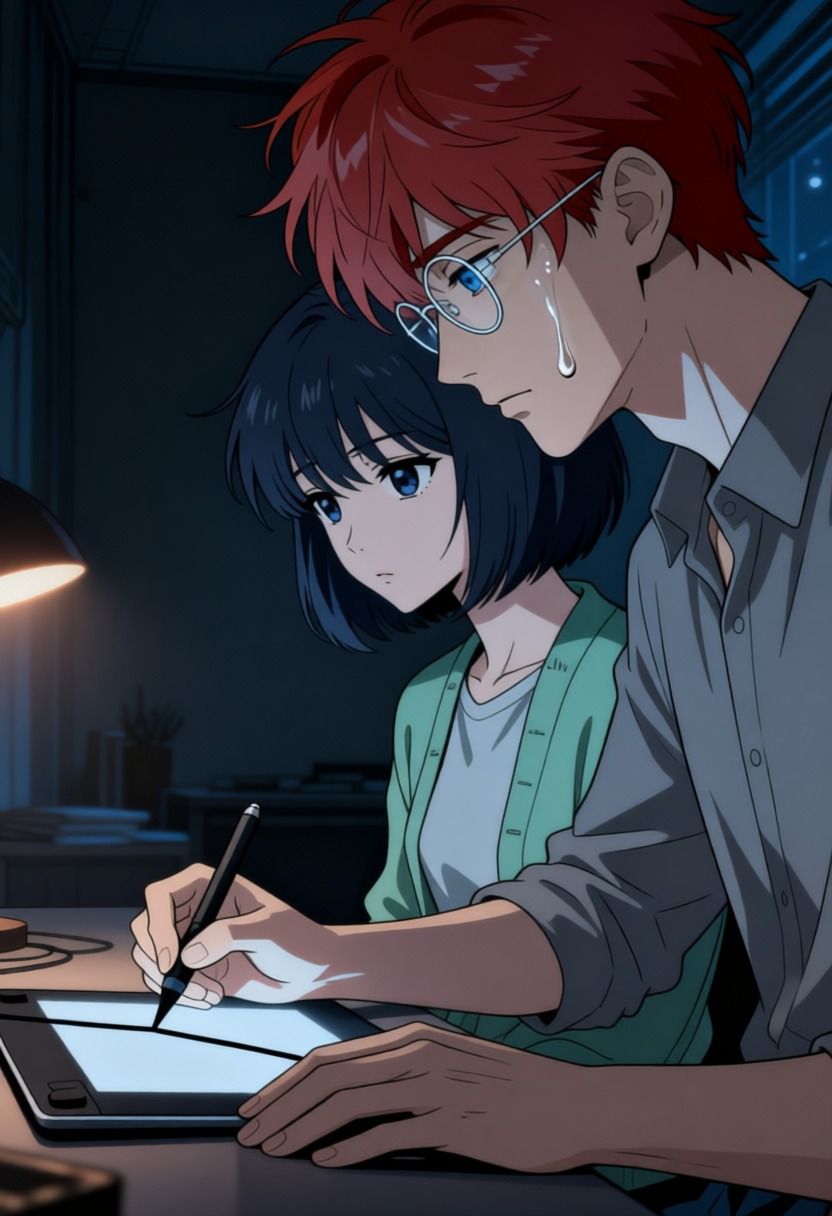
Gwan. The price of this drawing is me. There's no other well left. My mother, the places I came from, that person—all of it has already gone out. The sum is settled. …So I'll pay it, and go.
…I ran from that reckoning for ten years. I knew the last well was myself, and myself was the one thing I could not hand over. The alley does not write off a price you refuse to pay. Hold out, and it keeps the man instead of the payment. So I stayed inside the world I drew, hollow, the watcher waiting for the next one. Don't try to dodge it. This—this really is the last seat.
He poured in all his heart. There was no memory left to spare. A single tear fell onto the screen. As the pen drew its final line, the world heaved. In the rain, old Gwan raised his head. For the first time in ten years, expression returned to that hollow face. Relief. He dissolved into the light—out of the alley. At last.
The alley began to close. Slowly, the way a door closes. Outside the window, no one stood now. And within the last panel he had drawn, Siu began to set things down, one by one. The weight of the pen, the taste of cold coffee, the blue light of dawn, someone's quick bright voice, the warmth of a hand on his back. The five pale marks on his wrist stung, for the first time, a thin bright ache. That was where the alley had been holding him. The last to go were the two letters that made the name 'Siu.'
In the empty room, the pen rolled and fell. “…Author?” A trembling voice called him from behind. There was no answer. On the desk—only the two diaries remained, like a promise.
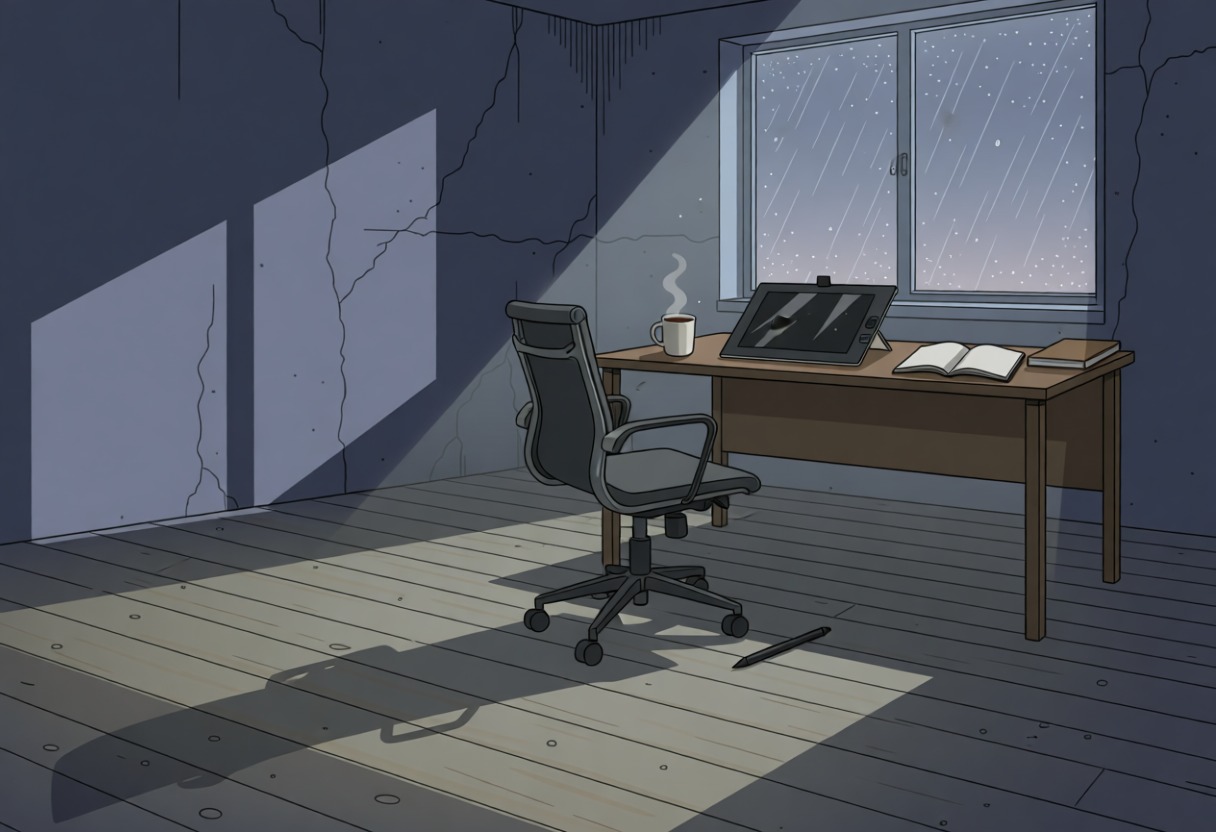
Outside, the rain had not fully stopped. The sound of it was thinning; the streetlight was going out. The alley still had one last hand's breadth left to close.
Hari picked up the older of the two. Open the cover: the small torn teeth. And then the first page, empty for more than a decade. She set the pen to it.
Since she was twelve, everything she had put on paper had been a record—written to be checked against later, written so as not to be wrong. This was not a record. This was a way of calling him.
'Hello. You are Siu.' She wrote that one line all the way to its end, with her whole heart.
As she finished the last stroke, the paper seemed to move under her hand. Hari looked at the other volume, lying open beside her. From the top line down, the writing was going out, one line at a time. Not like ink drying—like paper turning into paper that had never been written on at all. One line. Another. June 13. June 14. The nights she had spent writing him down went smooth, in order, from the top.
It was the price. She had drawn that one line's earnestness up from everything she had put on paper since she was twelve. The nights she had spent writing him down, and the dozen years before them—all one well, in that all of it had been set down by hand because she could not bear things vanishing. The alley took the whole well. Hari had known it before she ever set the pen to the page. She was the one who had written the fourth rule.
The pen stopped once. Then it moved again.
She kept writing while the paper emptied. A webtoon artist who works at dawn. Who likes cold coffee, and who fears deadlines and finishes anyway. And—someone who had just done something very brave. Beside her, the nights she had spent writing him down were vanishing line by line; under her hand, a person was being built again, line by line.
On the very last page of the second volume, she fixed a photograph and added a few lines. Then she set the pen down.
Then the rain stopped. The streetlight went out. The alley closed. The cursed cycle broke, and the thing that had been eating him closed with it. The price had already gone out with the first line. Every night she had spent writing him down had been carried off in that one line, so the sentences she wrote after it had no well left to draw from. And so those sentences—took nothing at all.
Hari laid the two blanked volumes side by side on the desk and left the first page open. Outside, it was getting light.