7Ep.. The One Who Saw First
For three days after the call cut off, Doha barely slept. The teacher had told him not to seek the source. And yet the source had come looking for him first, from a number that didn’t exist. The lock he’d been told not to touch was already opening from the inside.
When he stepped into the consultancy, Sea was already at the table. Papers were fanned out before her again. By now the sight frightened him. Whenever Sea laid out her papers, something that couldn’t be explained was sitting on top of them.
“Who’d you fact-check this time,” Doha asked, shrugging off his coat.
“You,” Sea said. “And three others besides you.”
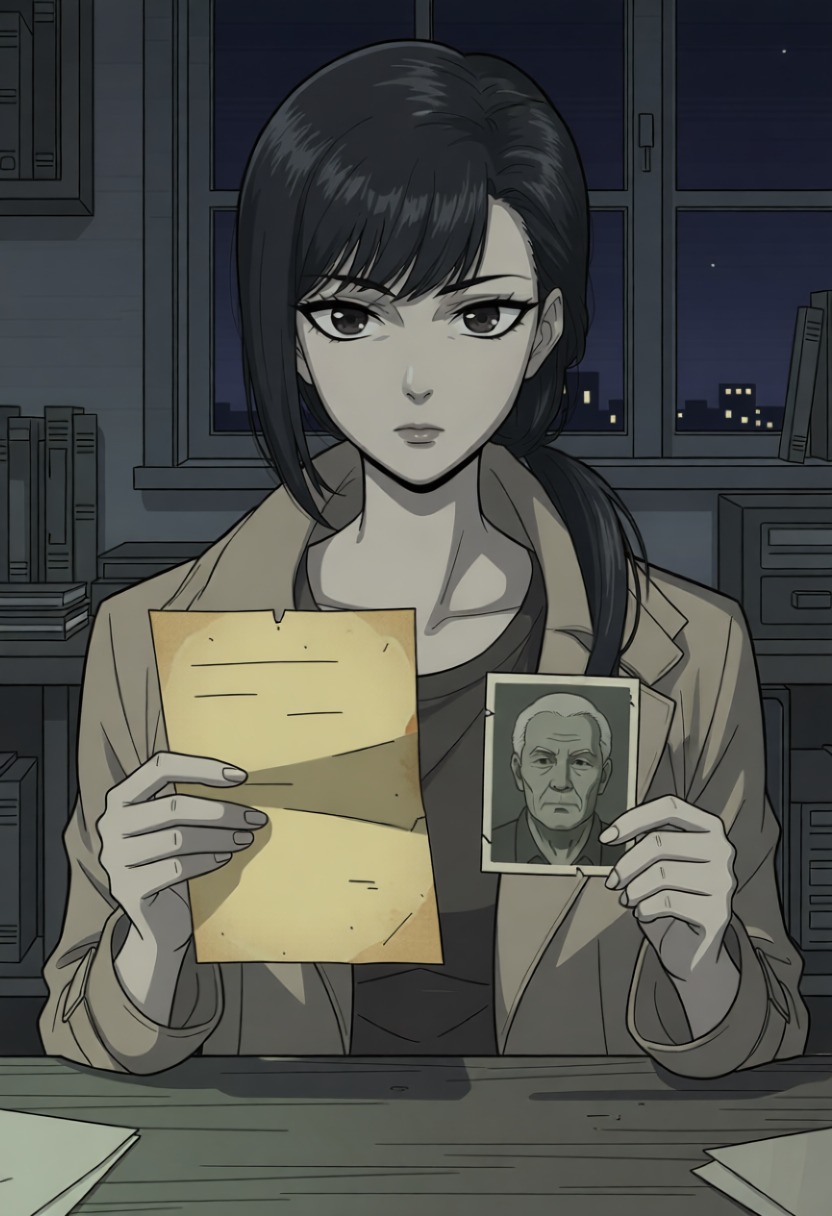
“Nine years ago.” Sea slid a faded ID photo across. An old man’s face. “This man ran ‘consultations’—seeing what others couldn’t. Same line of work as you. And then, from one day on—” she pressed a finger to where his record cut off. “Like you, he vanished from the paperwork. No death certificate. He just… isn’t there.”
“I found three more. All the same. People who saw what others couldn’t. Every one of them, the records just stop at some point.” Sea looked up. “Statistically, this is not coincidence.”
Doha studied the old man’s photo. A face he’d never seen, yet the eyes were somehow familiar. Eyes always watching something, and so always a little tired. He had seen those eyes in a mirror.
“…So I had seniors.” He muttered it, trying to make it sound like a joke, but the end of it frayed. “I knew the benefits were lousy. Didn’t know this was how you got retired.”
Sea didn’t laugh. She held out the last man’s last known address—an apartment on the city’s edge, emptied for redevelopment. Do not go to the source yourself. The teacher’s words tugged at the back of his skull. Doha built himself an excuse: he wasn’t looking for the source, only for a person. A person already gone. Excuses were always built toward the place you wanted to go.
The emptied apartment was dark even in daylight. A single fluorescent tube at the end of the hall flickered as it died, and unfaded water stains trailed across the floor. Doha smelled it before he saw anything. Rain-wet earth and antiseptic. The smell that came from himself.
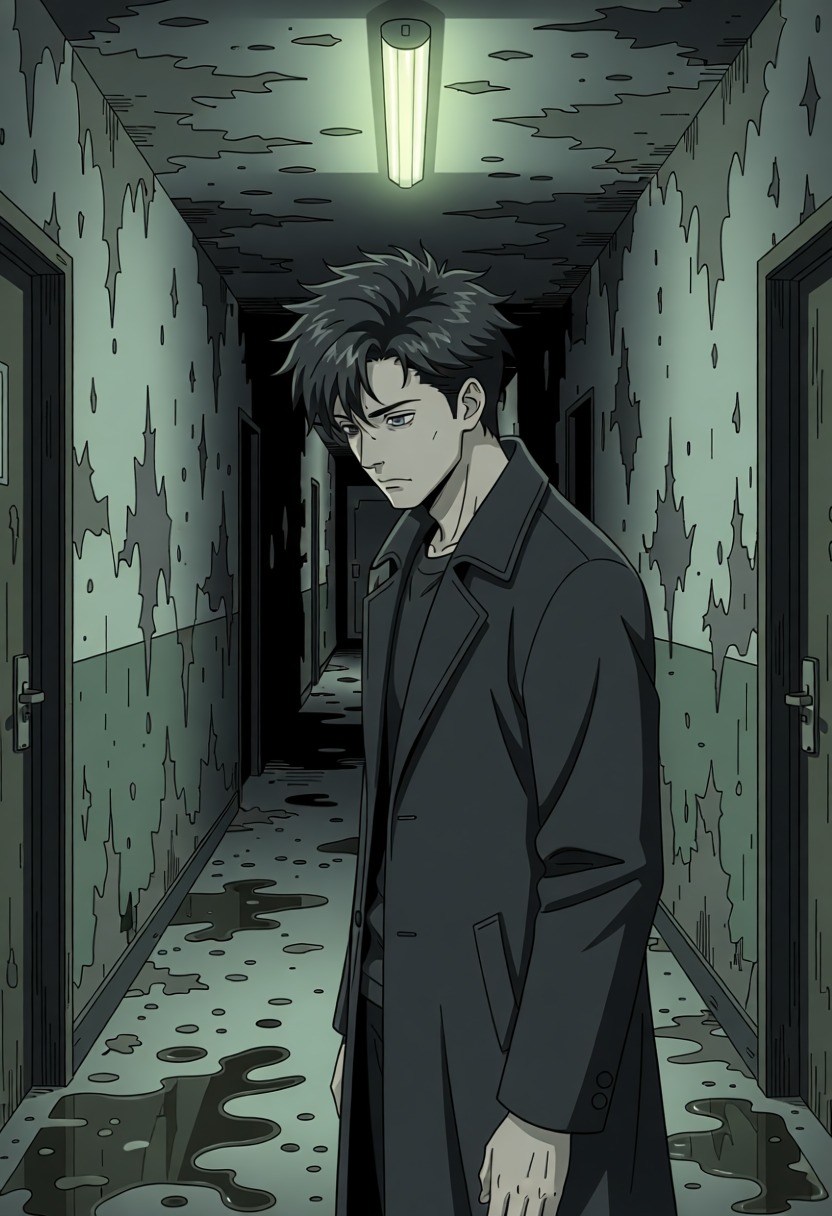
The last man’s home stood empty. No furniture, no belongings, no one. Only, on the doorframe, a single mark that looked deliberately set there—a black, knotted ring, blurred with water.
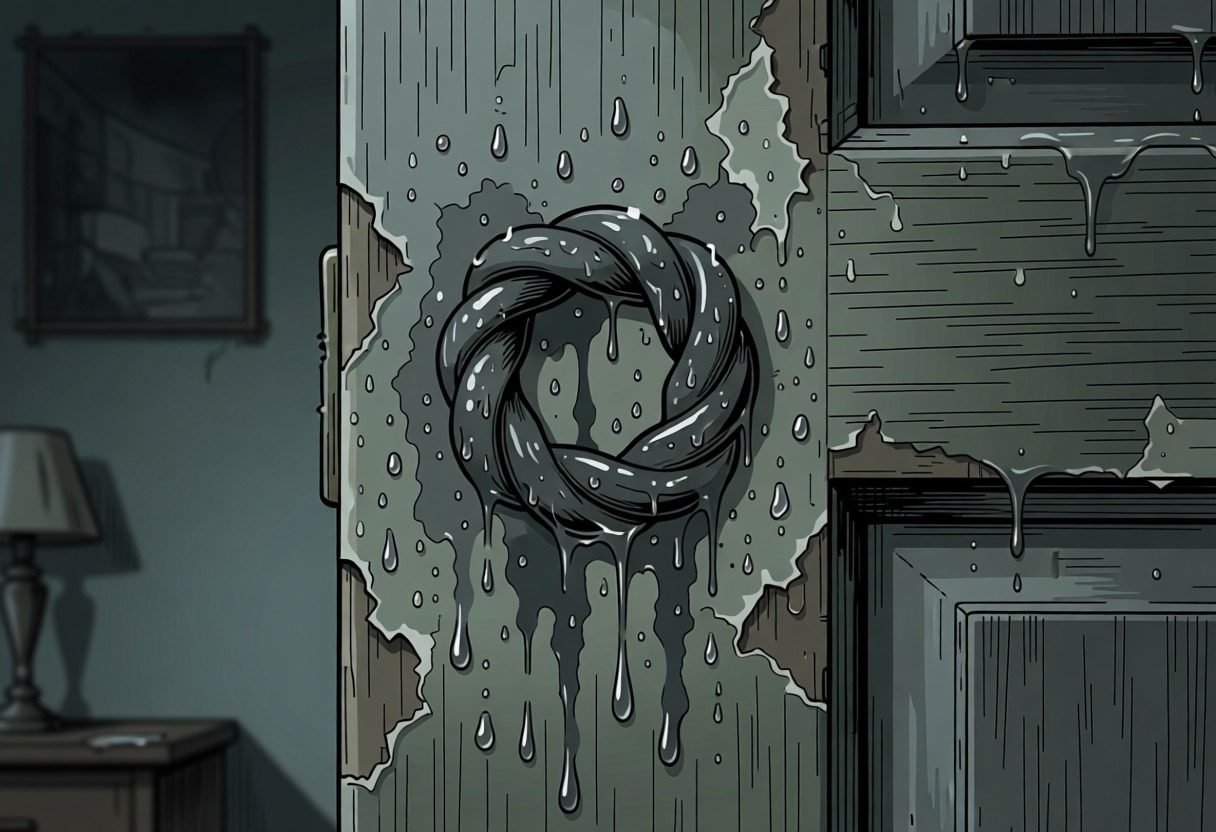
Doha recognized the knot. The same shape he’d seen in Mingyu’s case—the trace the teacher had called something “someone grew.” As he reached for it, a sound came from behind him. Not water. A human sound. The crisp click of something being closed.
Deeper in the empty room, there was a person. A long dark coat. His back to them, he was slowly sealing something from the air—a faint, glowing wisp like a handful of smoke—into a small metal case. The motions were clerical, practiced. The hands of someone who had done this many times.
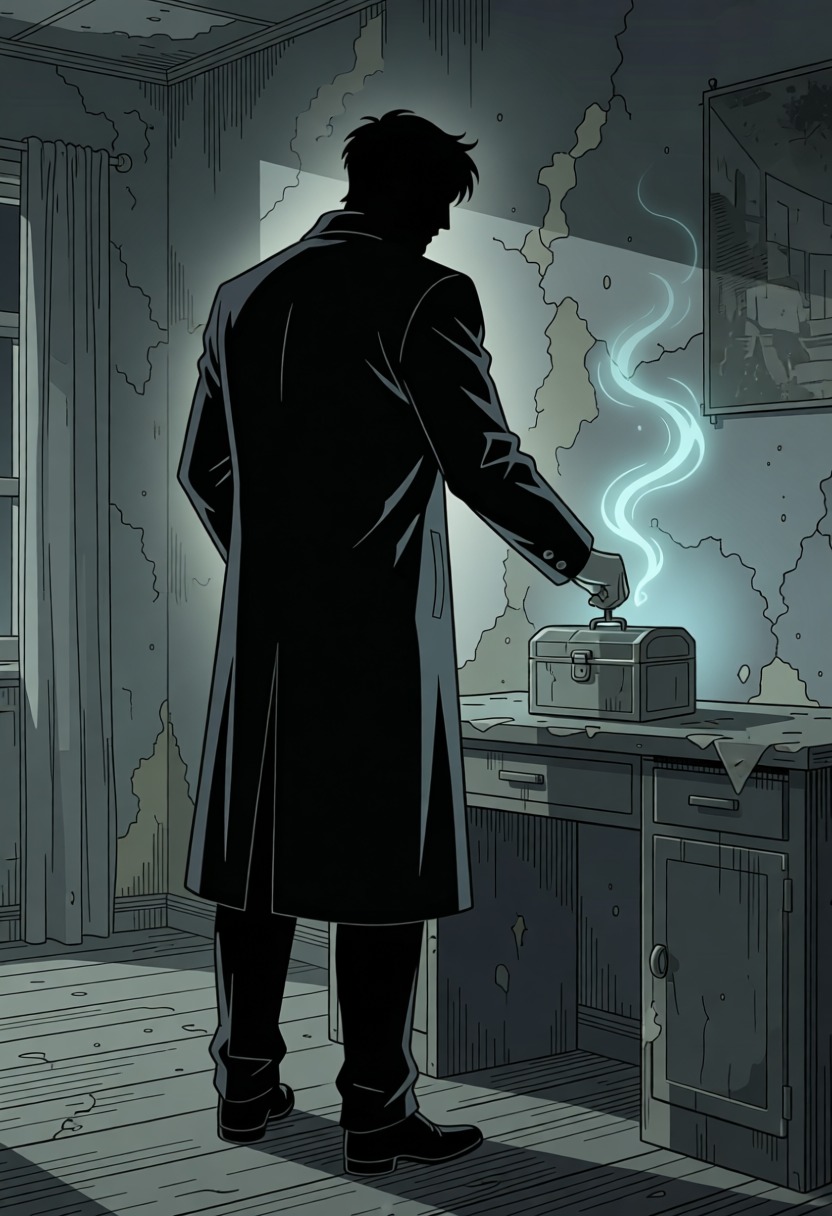
“Don’t touch it.” The man spoke without turning. His voice was calm, dry as someone reading a file aloud. “It isn’t yours.”
“…Who are you,” Sea asked, stepping in front of Doha.
“Someone who cleans up.” The man locked the case. “What you call ‘resolution,’ we call recovery. Same thing, different word. You release them—and we collect them.”
“The man who lived here,” Doha said. For the first time, the man turned halfway. Shadow erased the upper half of his face. “Recovered. Three years ago. Someone who sees too much, like you, becomes a passage himself. Left open, he’s dangerous. So we close him.”
The back of Doha’s hand throbbed. The mark beneath his sleeve stung, as if answering the words.
“Yoon Doha.” The man knew his name. “Dead seven years ago, on paper. I know. You’ve been on our list a long while.” He slid the case inside his coat. “Honestly, you’re not in the same class as those three. They were gaps under a door—you’re the door itself.”
“Except.” He turned to go, letting one last line slip. “The other side may take you before we get to clean you up. Which is, frankly, a headache.” Doha’s spine went rigid. “…The other side.” “You got a call. From a number that doesn’t exist.” For the first time the man’s voice dropped, just slightly. “That wasn’t us. We don’t make contact like that.”
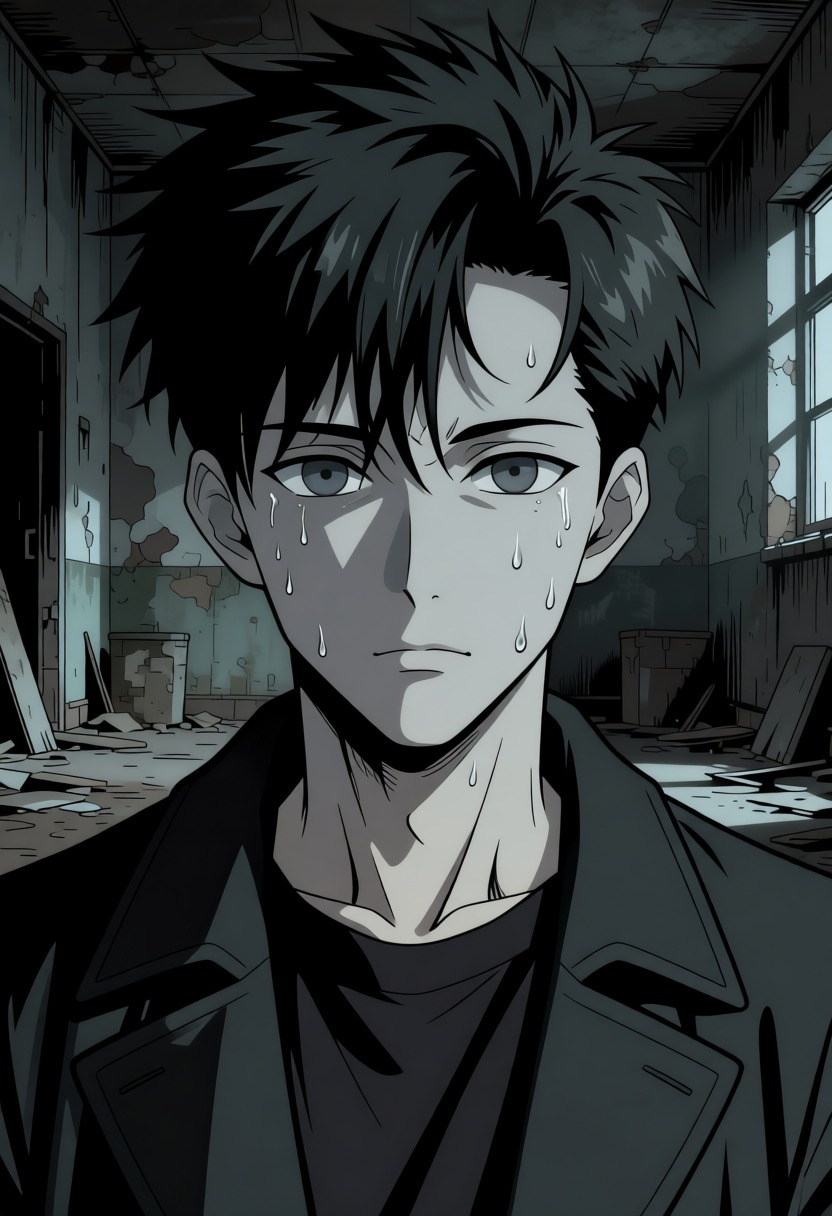
Leaving only that, the man walked off into the dark of the corridor. The flickering tube went out completely as he passed beneath it. Doha stood where he was and looked down at the back of his hand. The mark had spread, at some point, a finger’s width further than when he’d first seen it.
He thought he understood now why the teacher had told him not to ask. Knock on the door, and the other side knows you, the old man had said. But Doha had never knocked. The other side had. And the hands reaching to collect him were not just one.
Everyone who had seen before Doha had been ‘recovered.’ Between the hand that meant to clean him up and the voice that meant to take him away, the blank of seven years ago only deepened. Even the man who’d come to close it swore the call, at least, was not theirs.