3Ep.. I Did Nothing Wrong
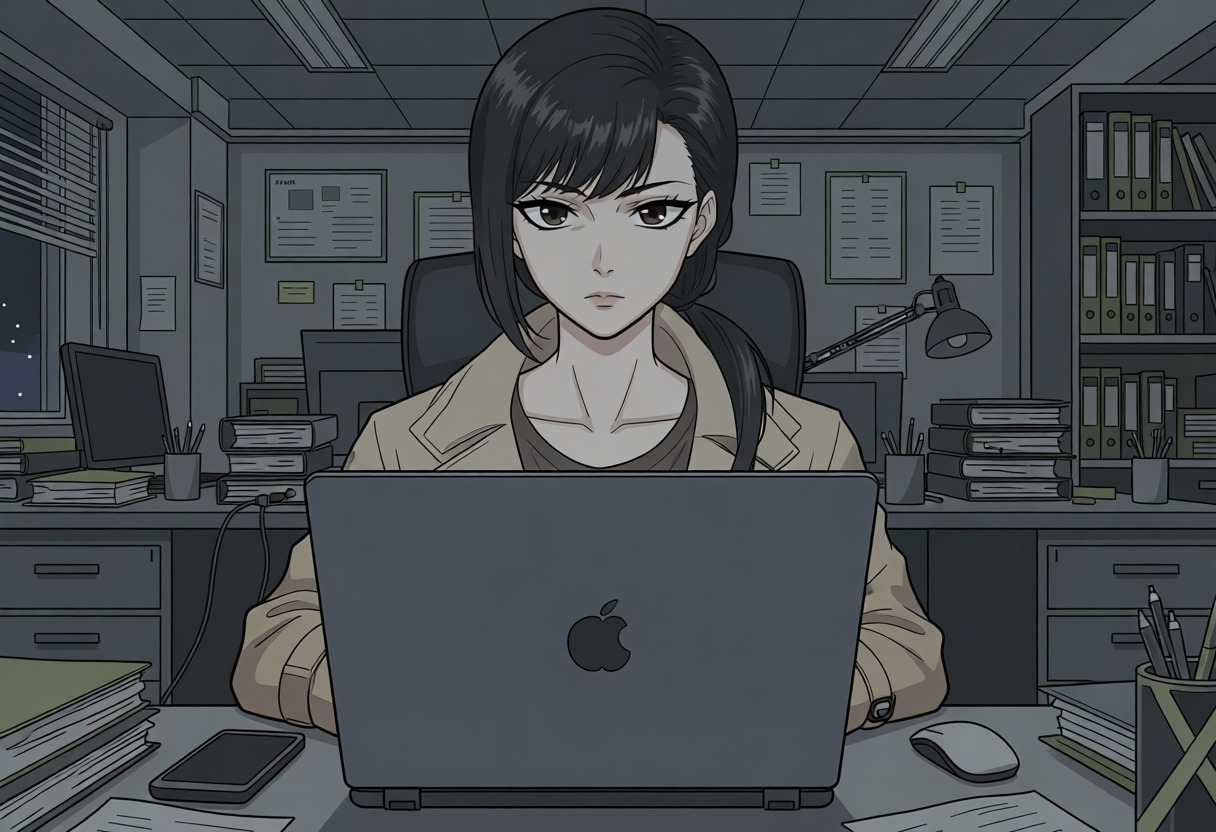
The next day at noon, the consultancy door flew open. It was Sea. Without a greeting, she set her laptop down on the desk first, her hands hurried. The shadows under her eyes said she’d been up the whole night.
“Up all night digging the past.” Doha looked up from his cup noodles. “That’s usually my job. Not that you’d envy it.”
Sea acted as if she hadn’t heard a word.
“Last summer.” She turned the laptop toward Doha. A scrap of local news—a drowning at a reservoir. “Mingyu was there. The victim was a junior who went with him. Twenty-two.”
Doha studied the photo. The drenched figure’s face wasn’t there yet. But the finger that stopped the scroll already knew—whose face it would turn out to be in the end.
“An accident?” “Officially.” Sea adjusted her glasses. “Mingyu’s statement—‘he sank in an instant, no time to do anything.’ But the autopsy disagreed. Four or five minutes to drown, at least. Not an instant.” She paused. “Four or five minutes is time enough for a person to cry for help.”
Doha didn’t answer. Only the red light of the recorder on the desk blinked quietly.
That evening, back at Mingyu’s home. The moment Doha stepped through the door, he checked the floor first. The wet marks that had been mid–living room yesterday were now a hand’s breadth from the bedroom door, as if they’d crawled there overnight. He couldn’t take his eyes off them.
“Your junior.” Doha began slowly. “At the reservoir.” Mingyu went white. “…Why bring that up.” Doha stepped closer. “That day—could you have reached him?”
“No!” Too fast. “I couldn’t reach him. Too far, I nearly went under too, even I— even I couldn’t do anything. No one could have saved him. I did nothing wrong.”
I did nothing wrong. The same words, three days running. Though no one had asked.
In that instant, something rose slowly from the wet marks by the bedroom door. Doha’s breath stopped. The drenched thing—it wore Mingyu’s face. Neither Sea nor Mingyu could see it. Only Doha did.
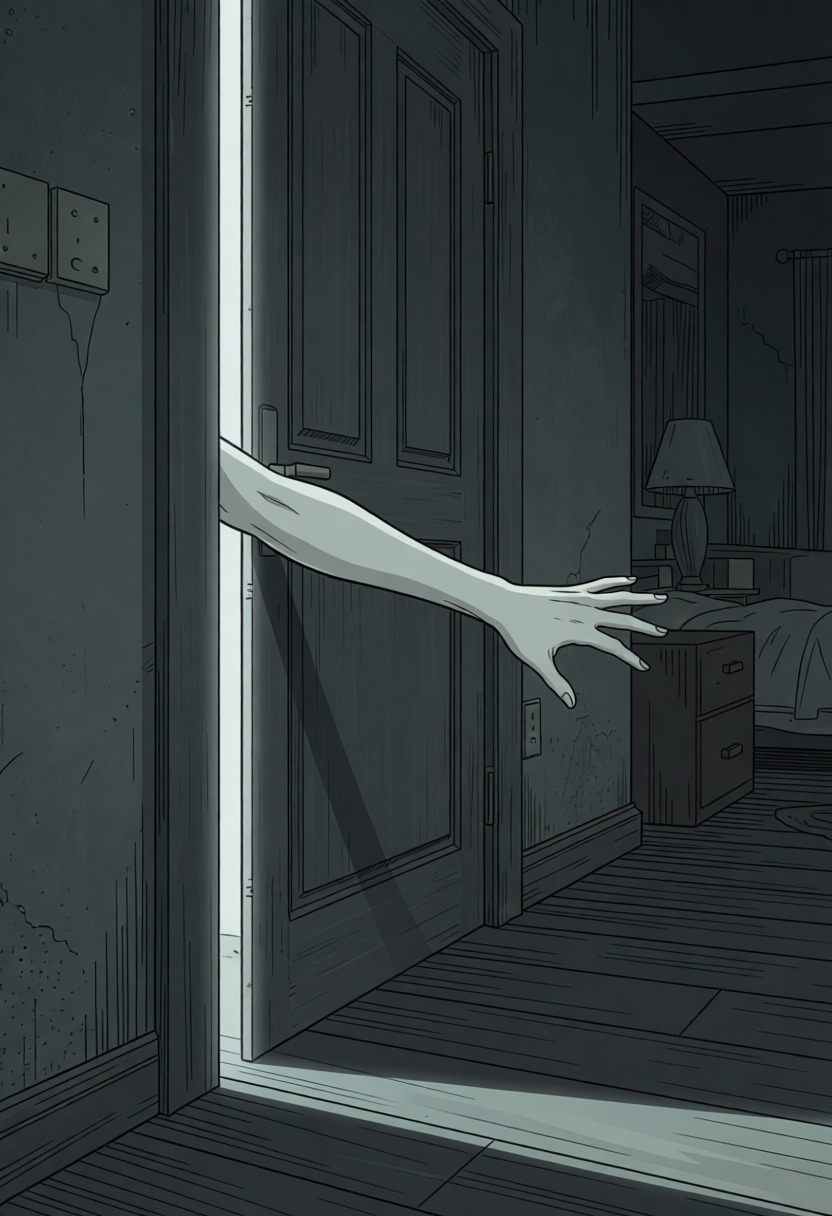
It lifted one arm toward Mingyu. As if reaching out to someone. Without meaning to, Doha followed the fingertips. It would touch him. Surely it would. But the arm stopped in midair. Just short of touching. A hand’s breadth away.
Before that hand’s breadth, Doha understood. That was not the dead junior. The hand drawn back while trying to save him—it was Mingyu himself, at the instant his reaching hand had stopped. The hand’s breadth of hesitation Mingyu had chosen to look away from for life was now, before his own bedroom, repeating the same motion every single night.
“Mingyu.” Doha’s voice sank. “Do you really not know why it wears your face?”
Instead of answering, Mingyu clapped both hands over his ears. Like a child.
To Sea, the space before the bedroom was simply empty. All she could see was Mingyu, ears stopped, curled up. She halted the hand that had been about to close the laptop. These were not the gestures of someone caught in a lie. They were the gestures of someone enduring something to the death. The stalker theory she had clung to until yesterday—she could feel it, herself, quietly collapsing before those trembling shoulders.
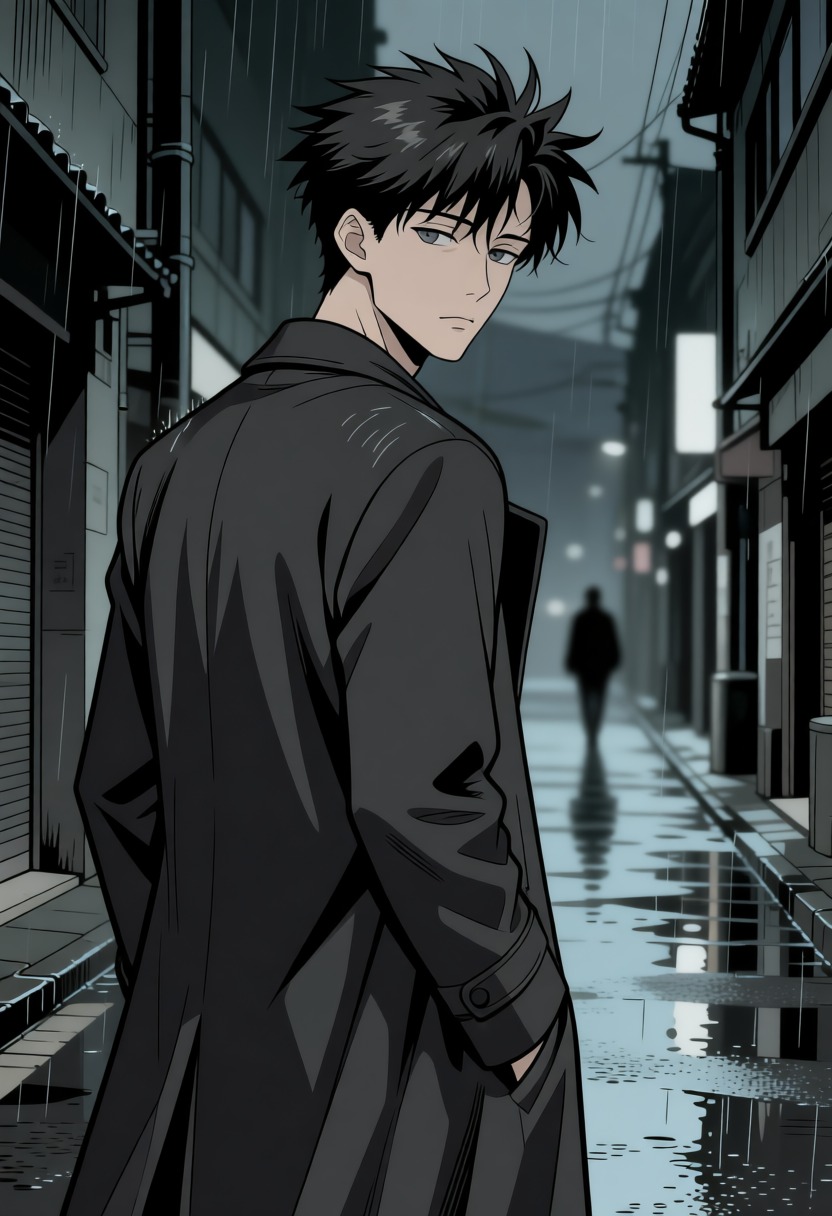
On the way back to the consultancy. Streetlights smeared across the wet asphalt. Doha glanced back without thinking—and stopped walking.
The thing—the one wearing Mingyu’s face—had followed him. Far behind. Head bowed. The thing that should have been in Mingyu’s home—why. Doha couldn’t step back and froze on the spot. And in that instant, a smell drifted to him on the wind.
Rain-wet earth. Beneath it, faintly, the smell of antiseptic.
Doha’s heart dropped. He knew that smell. It wasn’t the scent of the scene. It was the smell that came from himself. The one that clung to his pillow when he sometimes woke before dawn—the smell he’d never once figured out the source of in seven years.
“…Why.” Doha murmured low. “Why do you smell like me?”
There was no answer. It only bowed its head deeper.